

This winter has been very generous with snow. Dover’s Community Services have done a remarkable job of keeping streets plowed and treated, but sidewalks fare much worse. It isn’t uncommon for me to see Dover residents walking or running in a parking lane instead of using the nearby ice-covered sidewalk. These pedestrian paths are treacherous after a snow and can stay that way for a week or more. Today’s article focuses on some issues I’ve observed during the winter maintenance in Dover. While I’m certain that city staff are working hard to clear off sidewalks in a timely manner (I have seen them in the early morning hours doing just that), the method of clearing seems to be only partially effective. Some pedestrian areas are left looking rather rough.
2026 Upcoming Meeting Details
Our in-person meetings are where we gather to discuss issues that we observe in our local towns and progress we have made on active projects. Join in for the conversation and let me know if you want to bring a topic of your own.
Seacoast Meeting
Monday, February 9th 6:30PM
Juniper Kitchen
6 Third St, Dover, NH
Seacoast Social
Monday, February 9th, immediately following Seacoast meeting (~8PM)
OTTO Pizza
431 Central Ave, Dover, NH
Exeter Meeting
Wednesday, March 4th 6:30PM
Exeter Library
4 Chestnut St, Exeter, NH
Ice Hazards
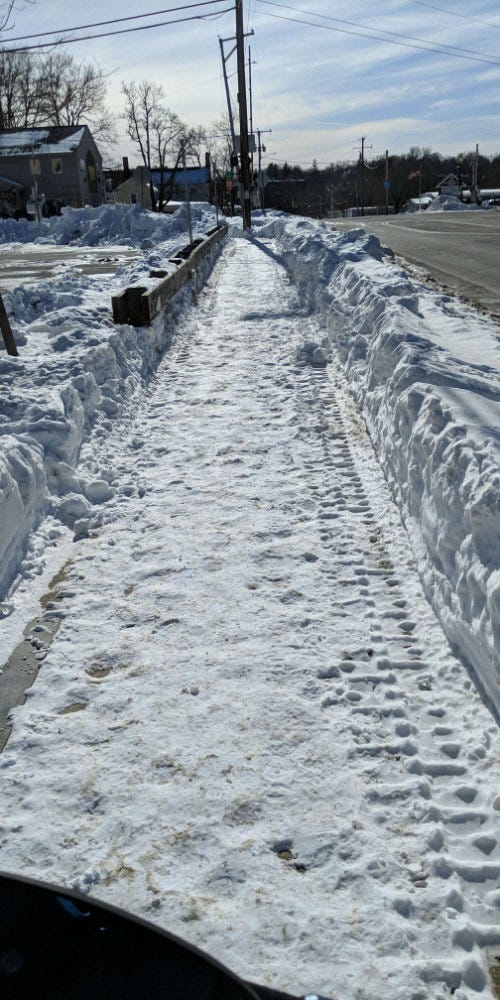
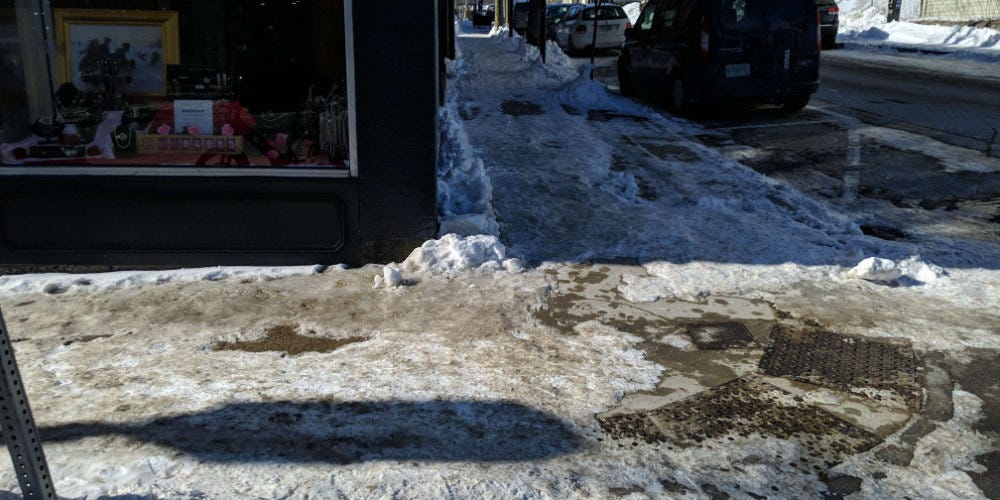
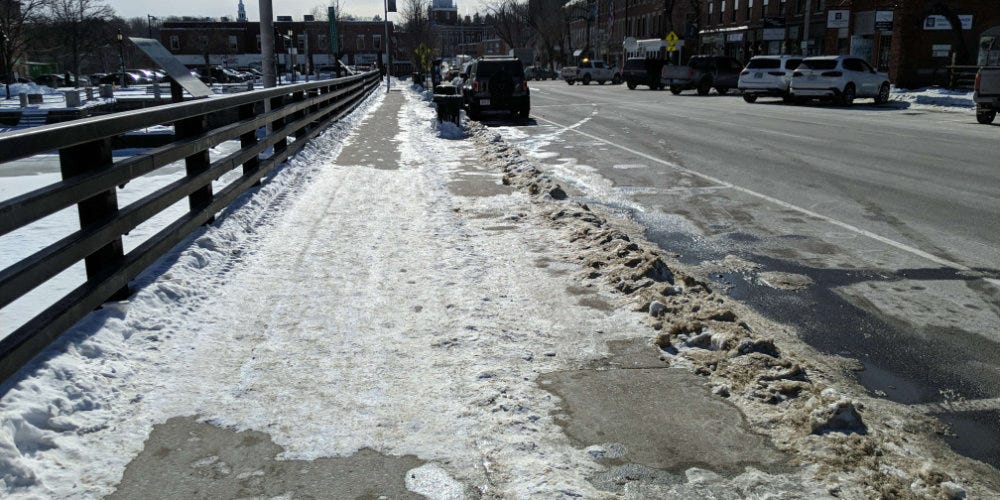
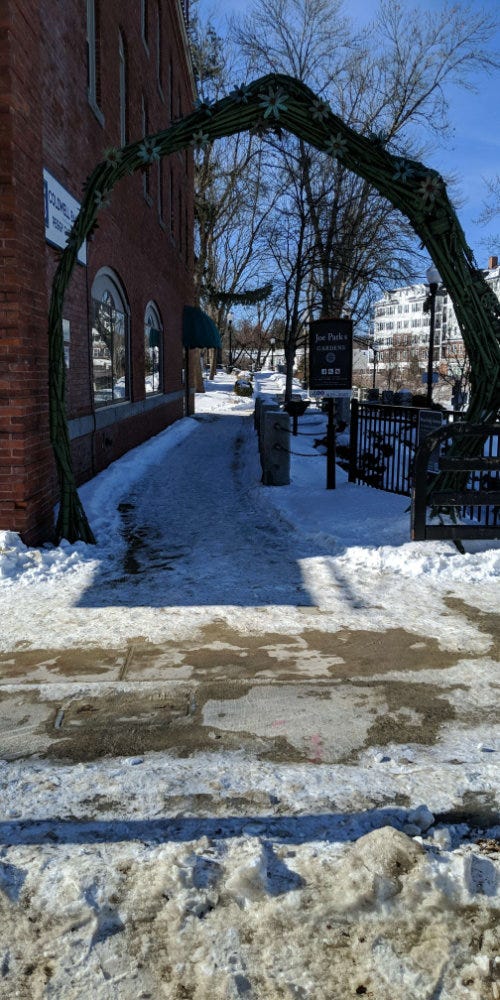
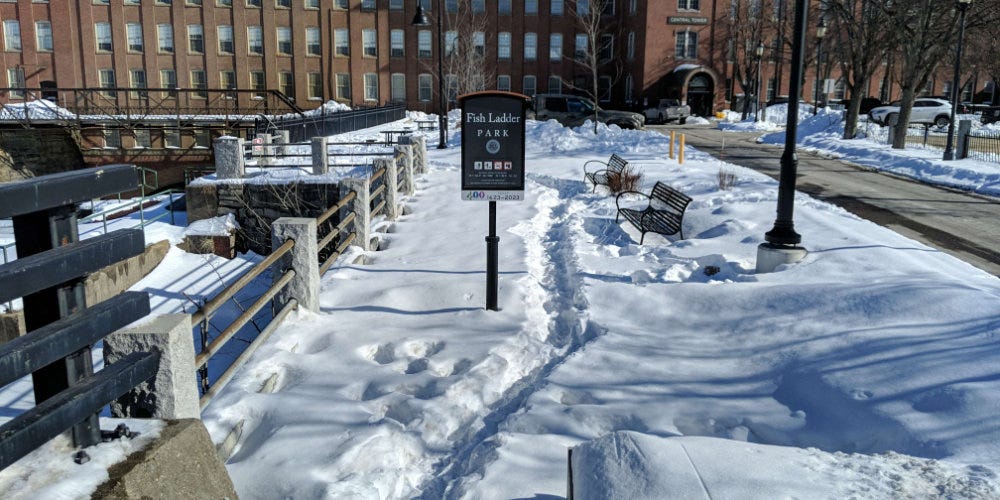
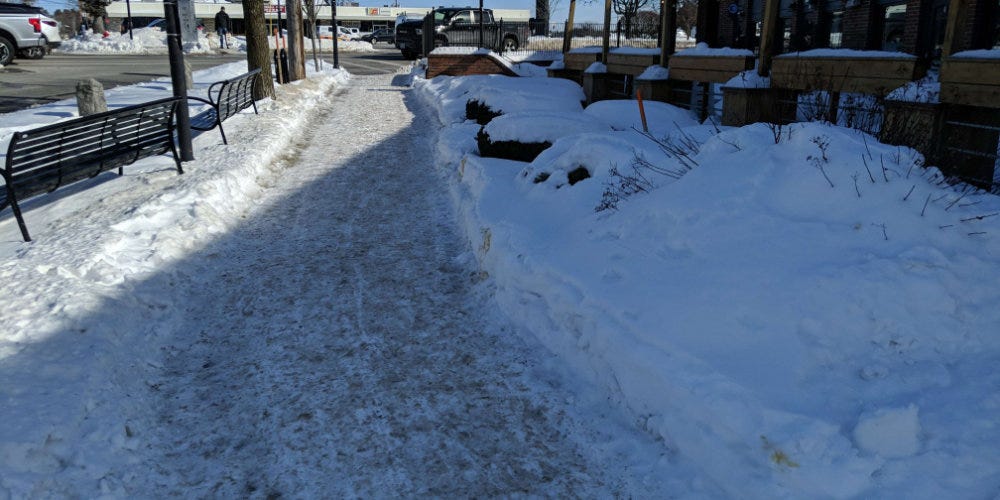
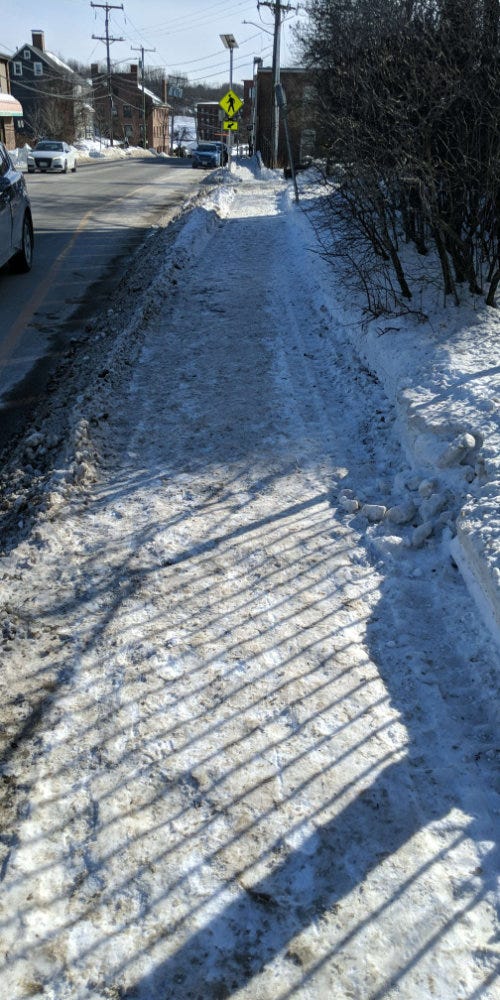
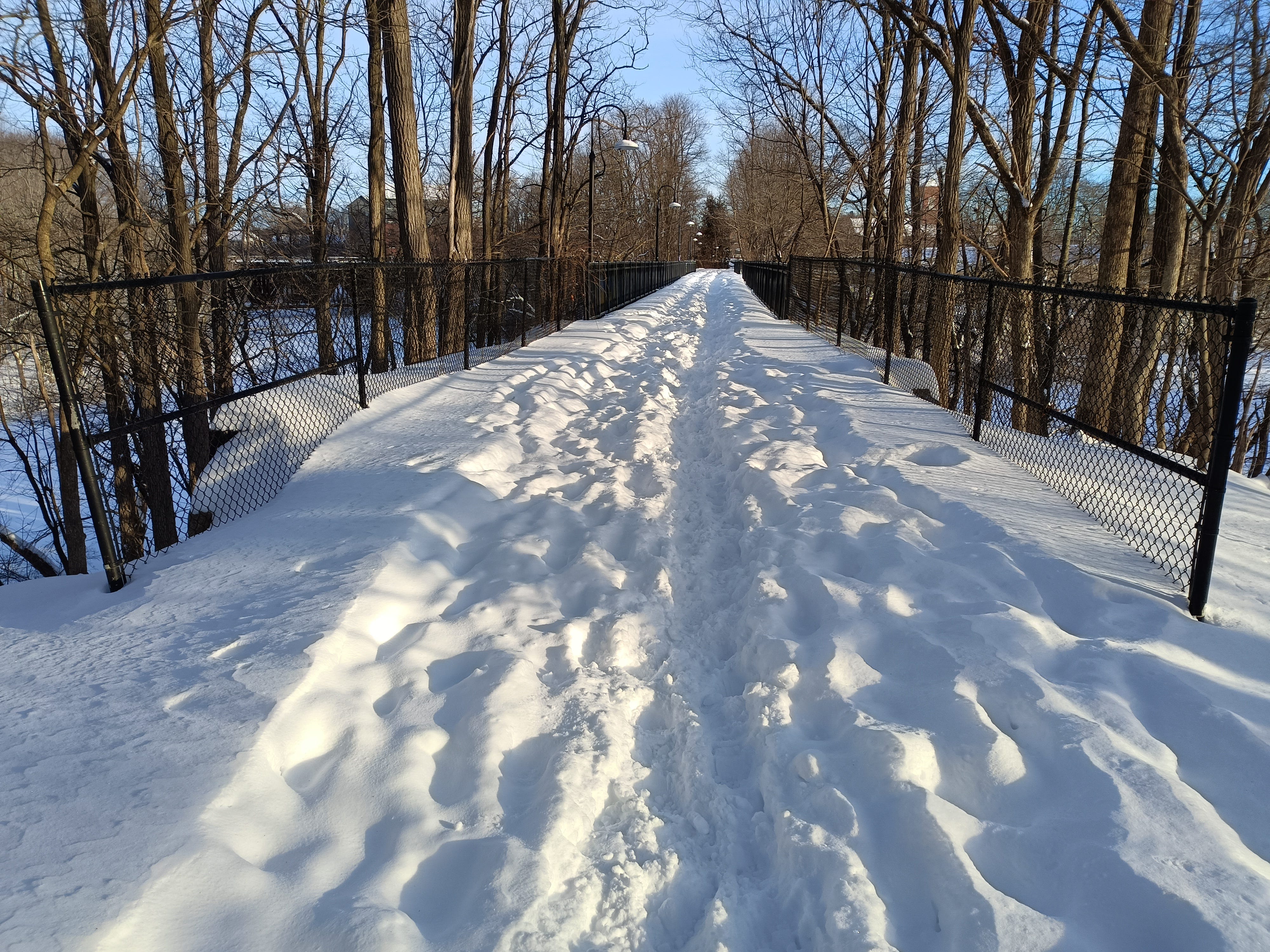
I took a walk around Dover’s Downtown a week after the recent big snow storm to see how things were going. Let’s take a look.
Feeling Under The Weather
These are not some remote sidewalks that serve a small section of the community. These are in the middle of Downtown Dover where businesses and residents rely heavily on good walkability. They all feel the impact of these unsafe sidewalk conditions. The space becomes harder to navigate for everyone, especially people pushing strollers, the elderly, children, and people with mobility challenges. Granted, snow can be a tough challenge, but leaving our infrastructure covered in ice is hazardous, uninviting, and for some people unusable. Dover needs to have its downtown continue to be a safe and pleasant destination, even in winter.
Automobile infrastructure doesn’t suffer these unsafe conditions, and drivers are able to easily access downtown and parking quite safely. That comfort in driving strongly contrasts with the walking experience once the driver exits their car where they must confront the icy paths that lead to their intended destinations. Downtown is a heavily trafficked, high density area with a strong need for functional, pedestrian infrastructure and the sidewalks in these photos are critical to its success.
Looking For More Effective Approaches
Most of these photos were taken one week after the snow storm in Downtown Dover, which is the most valuable land in the city. One week seems like enough time for the city to have a chance to clear these areas. If the nearby streets are clear and dry for several days, then is is reasonable to expect the same for key pedestrian routes. I think that the photos clearly show that there has been work done here, and I have personally seen workers out in the early morning hours plowing the sidewalks along Sixth Street. The problem is not one of neglect or a lack of effort, the city has people who are working at this. I believe the issue lies in the method and tools being used which are leaving behind trails of ice. They are simply not effective enough to do a quality job.
Snow Melt


In a recent trip through Newmarket I noticed that their downtown looked well maintained and called their town to find out their secret to cleared sidewalks. The lady I spoke with told me that the town works really hard to clear the sidewalks of snow and (she believes) they are salted afterwards. Likewise, Third Street in Dover has a section of sidewalk near The Office Lounge that is perfectly clear and stands out from the other sidewalks in the city. They use a snow melting substance, salt or other, that clears the walkways all the way down to the brick.
Sidewalk Sweeping
Another effective approach is to sweep the sidewalks. These tools can handle uneven surfaces and will clear down to the pavement. I looked for good quality videos of cities using them, but they were very short in length or from a distance. The best examples I found were the advertisement videos.
Maybe this kind of tool is missing from Dover’s arsenal. It seems that something like this could handle getting closer to the sidewalk to prevent ice and also manage pedestrian areas such as Fish Ladder Park and the Community Trail Bridge.
Conclusion
I know that snow removal is challenging and I am thankful for all of the hard work the city has done. I admit that I am no expert on the matter and I spoke with Dover City staff about the issue to see if there were policy barriers, budget issues, or some other factor that is contributing to the conditions. I was told of a staffing problem, which I’m sure doesn’t help things. Dover is not the only one struggling either, many of the cities throughout the Seacoast (Newmarket excluded) have similar issues and that tells me that the problem is not unique or simple. That said, I can observe how prevalent this problem is and I think it deserves to be highlighted. I am aware that cities have to set priorities and manage a limited amount of resources to work on this task. However, pedestrian infrastructure shouldn’t be left in unsafe conditions or forgotten about for weeks during winter. I think that this is important to the success of our walkable spaces and there are clearly areas that can be improved here.